
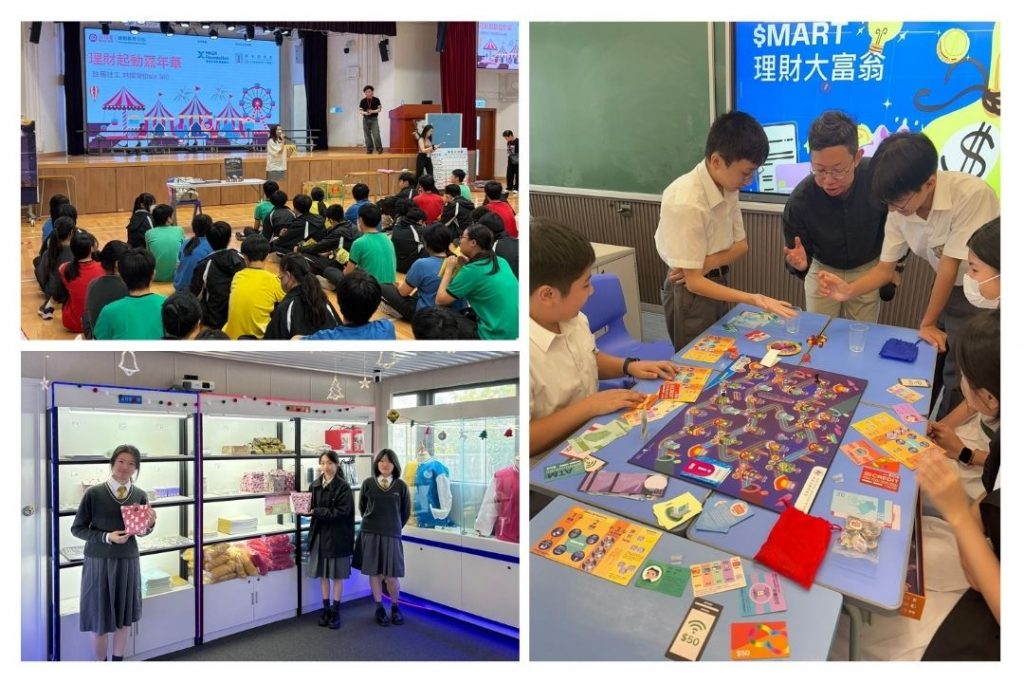
Although students have not yet entered the workforce, their daily consumption and use of pocket money are already shaping their personal consumption patterns. The Evangelical Lutheran Church of Hong Kong Lutheran Secondary School actively rolled out a series of school-based financial education initiatives, enhancing students’ financial awareness and cultivates healthy spending behaviours through diverse and interactive activities.
Strengthen financial planning, Reduce impulsive spending
Ms Liu Yip Lam, the Technology Education Key Learning Area (KLA) Coordinator, shared that over the years of financial education activities, the school has observed two major characteristics in secondary students’ spending habits. On one hand, some students demonstrated goal-oriented financial planning. They set long-term or short-term plans to purchase desired items, for example by saving pocket money, receiving rewards from family, or using red packets received during Lunar New Year. Going through this process, they learn to allocate wealth, practice self-discipline, and pay efforts for themselves. On the other hand, quite a few students show patterns of casual spending and peer-driven consumption. They tend to ‘spend it as it comes’ in daily consumptions. Despite understanding the importance of saving, they lack consistent saving habits and occasionally borrow money from peers, reflecting insufficient consideration in budgeting and financial planning. Some also display tendencies toward ‘peer-influenced consumption’ and ‘emotional spending,’ easily swayed by friends or celebrity endorsement to purchase non-essential items. These observations highlight the critical need for education on rational and responsible consumption.
In addition, using electronic payment tools and e-wallets is very common among students. Beyond online shopping, some parents use electronic tools to give pocket money. Owing to the convenience of the payment methods, students may unconsciously develop a habit of ‘painless spending,’ raising the risk of overspending. Students are also prone to making transactions in unsafe online environments or accidentally clicking on fraudulent links, leading to financial losses. Therefore, strengthen their knowledge of cybersecurity is of vital importance. On the positive side, the digital ease allows students to compare prices across various platforms, thereby reducing impulsive spending.
Deliver different areas of financial literacy tailored to different grade levels
Ms Liu believed that cultivating students correct financial mindset helps students understand the sources, uses, and limitations of money, enabling them to take responsibility for their own financial situations. Noting that junior secondary students have limited exposure to financial-related courses, the school integrates financial education into its Life Education curriculum. Form One students would play the ‘$mart Money Management 321’ board game to learn to make appropriate financial choices within limited resources and bear the consequences of different financial decisions. Through this activity, they learn to distinguish between ‘needs’ and ‘wants,’ becoming smarter consumers and selecting suitable payment tools. By Form Three, as students gain greater awareness of life planning, the curriculum introduces more advanced concepts such as personal credit, stock investment, and savings, equipping them with knowledge of financial domains in real-world society.
The school has organised ‘Money Management Game Booths & Consultation Counter’, adding fun to financial learning through booth games.
Through the ‘$mart Money Management 321’ board game, students made financial choices using different payment methods, which led to varying outcomes—for example, speeding up or slowing down the completion of the game, experiencing the responsibility that comes with their financial decisions.
The school also used the ‘Digital Stock Trading Guru’ developed by the Investor and Financial Education Council, to deepen students’ understanding the value of savings and insurance. Through the game, learners step into the shoes of traders, navigating the ups and downs of the stock market in a fun and dynamic way. They also took part in the annual ‘Digital Stock Trading Guru’ territory-wide competition, sharpening their financial acumen and gaining a real-world perspective on market behaviour.
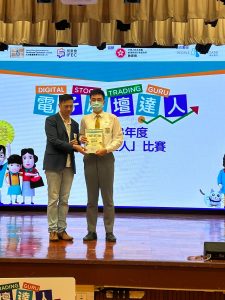
A student won the Top 10 Finalist in the ‘Digital Stock Trading Guru’ territory-wide competition.
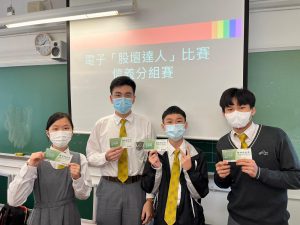
With only four places available for each school to join the ‘Digital Stock Trading Guru’ competition, the school first ran an intra-school group contest. All Form Five students compete for the four available spots, ensuring that every student had the opportunity to gain knowledge about stock investment.
To bridge classroom learning with everyday life, the school launched a self-service ' E-shop' as the scenario-based learning. Here, students and parents shopped as consumers, while student operators gained first-hand insight into the merchant’s perspective—exploring electronic payment systems and understanding the costs of renting digital platforms. This shift the financial idea from personal to business-level thinking. Students also produced promotional videos regularly, spreading financial knowledge across campus and making learning more engaging and practical. The store’s profits were donated to students in need, encouraging the practice of compassion through entrepreneurship.
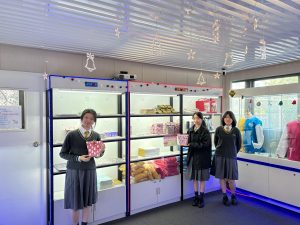
The ‘E-shop’ was operated by students studying Business, Accounting, and Financial Studies.
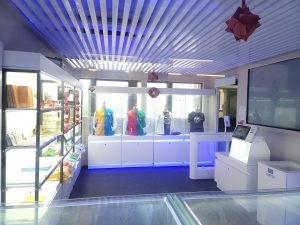
Students take full responsibility for the entire process—from sourcing materials and creating their own designs to managing the store’s setup.

Ms Liu Yip Lam (left), the Technology Education KLA Coordinator and Mr Chan Yee Nok (right), teacher for Business, Accounting, and Financial Studies, were awarded the ‘Investor and Financial Education Award’ from the IFEC.
Zhang Shuyin from Class 4D shared her reflections, ‘Through the school’s financial education activities, I have come to understand the concepts of “living within one’s means” and “value investing.” I also realized that financial management is about controlling the allocation of one’s resources. We should rationally plan for fluctuations and accumulate stable wealth.’
Enhancing anti-fraud awareness, Help-seeking cases greatly reduced
Two years ago, a significant number of students fell victim to scam text messages, collectively losing over HK$6,000. In response, the school arranged talks to boost anti-fraud awareness and strengthen cybersecurity knowledge. Cybercity topics were woven into Life Education lessons, where real-life cases were used to educate students how to navigate the internet responsibly and sharpen their information literacy skills. To further enhance financial resilience, the school collaborated with various business and non-profit organisations, such as IFEC, the Hong Kong Family Welfare Society, and the Hong Kong Institute of Certified Public Accountants, to organise financial activities and seminars that enhanced students’ financial literacy. Ms Liu was pleased to note that this year, the number of fraud-related assistance cases has dropped to nearly zero.
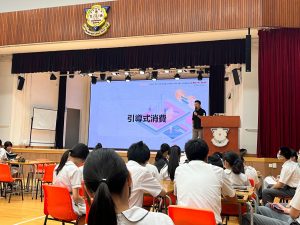
Through a series of seminars, students’ concepts about financial literacy improved markedly.
Given the positive outcomes of financial education, the school will continue to implement a wider variety of activities, hopefully through increasing students’ financial awareness, help them build correct values and be better equipped to cope with present and future life challenges.