As the saying goes, ‘Life rarely goes exactly as we wish.’ Learning how to face adversity is truly a lifelong lesson. From early childhood to adolescence, young people may experience different kinds of loss—whether it’s a beloved toy, a classmate moving house or emigrating, the passing of a pet, or even the loss of a loved one. Along the way, they also encounter challenges such as exam results that fall short of expectations, difficulties in friendships, teenage relationship struggles, or sudden situations that leave them feeling overwhelmed. Parents can play a vital role by offering support in different ways, helping their children not only develop the ability to cope with adversity but also learn to manage their emotions properly.
To strengthen children’s resilience, it is vital to nurture their ‘Adversity Quotient’ (AR)—an inner quality that reflects their ability to cope with setbacks, tolerate difficulties, and bounce back from challenges. The higher the AQ, the better a child can face, accept, and ultimately overcome life’s obstacles. In fact, parents can help equip their children with this important skill in everyday life, laying a strong foundation for children to tackle future challenges.
Four Tips to Equip Kids with AQ:
1. Empower with Confidence
Parents can help children recognize both their strengths and weaknesses, and affirm their abilities. For example, introduce different animal traits with fun picture cards to inspire kids to discover their own unique qualities. In daily life, parents can repeatedly highlight and appreciate their children’s strengths, reinforcing their sense of confidence.
2. Understanding Emotions
Through different games, parents can help children recognise both their own feelings and those of others, while learning proper ways to express them. For example, looking at everyday photos together and encouraging kids to use a variety of emotion words to describe how they felt at the time, to enrich their emotional vocabulary and develop skills in expressing emotions.
3. Managing Stress
When children encounter challenges or pressure, they may experience emotions such as sadness or frustration. Parents can use symbolic methods to help kids release negative feelings. One simple yet effective approach is to introduce the idea of a ‘venting bag’: encourage children to voice their grievances into a paper abg, then toss it away as a symbolic gesture of letting go. Parents can empower children with polite phrases for asking for help. By equipping them with the right language to express their needs at the appropriate moments, children can effectively seek support from others.
4. Developing Social Skills
Good social skills help children enhance confidence, improve communication, and build trusty and inclusive relationships. Parents can encourage their kids to play games with peers, using these moments to teach basic social etiquette and strengthen their ability to interact with others. Competitive games can also be used to encourage children to accept winning and losing with an open mind.

Four Steps to Overcome Adversity:
When children are facing adversity at the moment, parents can use the following methods to ease their stress and adjust their mindset, helping them understand that adversities or difficulties are only a part of life and are often temporary. By drawing lessons from these experiences, turning them into nourishment and future reference, they can grow stronger and be better equipped to face the next challenge with resilience.
1. Handling Emotions
Parents can gently guide children to express their feelings right away, helping them identify what made them feel frustrated or sad. Parents should avoid blaming, instead, allow kids to feel understood and supported, which strengthens their sense of security.
2. Analysing the Cause
Parents can work with children to analyse the origins of an event, break down the reasons that led to setbacks, and explore room for improvement.
3. Coping Strategies
Parents can help children distinguish between external factors that are beyond their control and areas within their ability to manage, guiding them to move beyond feelings of helplessness and explore practical ways to handle challenges. By identifying what they can manage, children strengthen their sense of self control and build confidence in their ability to solve problems.
4. Putting Plans into Action
Encourage children to put coping strategies into practice in concrete ways. Remind them to take things step by step, trying and adjusting according to their own pace and ability.
Parent Child Education Resources:
Parents can make good use of online resources and apps to open up conversations about resilience with their children, planting these seeds of adversity intelligence early.
1. Build Resilience Short Video by Student Health Service, Department of Health
This video shares tips for parents on building children’s resilience, highlighting important do’s and don’ts, for example, avoid blaming and overprotection, and instead to give children the space they need to grow.

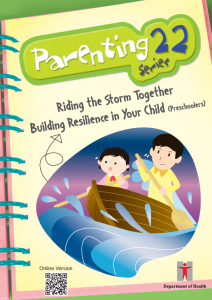
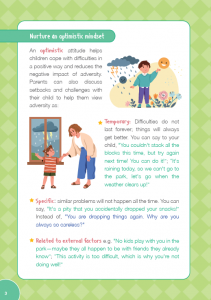
2. Parenting Series 22 & Parenting Series 23 – Riding the Storm Together: Building Resilience in Your Child (Preschoolers) Online Booklet by Family Health Service, Department of Health
Designed for parents of preschool children, this resource shares practical ways for parents to build reliable and secure relationships with their young children from an early age. It guides parents in helping kids express their emotions, learn to regulate their feelings, and strengthen their self‑control skills.
3. What’s Growth Mindset? Animated Video by The Education University of Hong Kong’s Child and Family Science Centre (Chinese only)
This short animation explains the difference between a fixed mindset and a growth mindset. A fixed mindset views ability as innate and unchangeable, leading children to avoid challenges when difficulties arise. In contrast, a growth mindset emphasizes that progress can be achieved through effort, strategies, and experience, encouraging children to embrace challenges with courage. The video also offers parents practical suggestions to help their children develop a growth mindset.

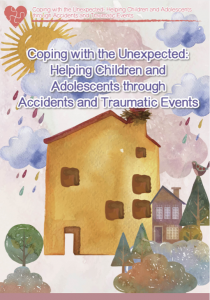
4. Psychoeducational Materials by the Hospital Authority
When children and adolescents face major life events, they may experience a range of psychological reactions. This series of booklets offers guidance for adults on how to support children who have gone through traumatic experiences. By adopting the child’s perspective, the booklets encourage them to process emotions in ways that feel suitable and natural to them.
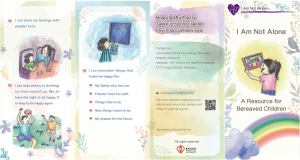
Emotional Support Apps:
Parents can help their children relieve stress and regulate emotions through conversations with professionals, small games, and various mind‑body exercises. The Hospital Authority recommends the following apps:
1. TourHeart+ by Jockey Club iOS / Android
Features ‘AI mental health companion’, articles, online forums, self-care courses, mental health exercises, and more. Suitable for users aged 9 and above.


2. ‘newlife.330’ by Psychiatric Rehabilitation Association (Chinese only) iOS / Android
Provides personalised mindfulness journey, immersive practice experiences, and more. Parents can accompany children aged 4 and above to use.


3. ‘Counseline 2.0’ by The Mental Health Association of Hong Kong (Chinese only) iOS / Android
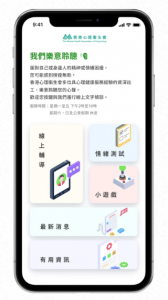
Provides online counselling service, mini-games, emotion tests, mental health information, community resources, and more. Parents can accompany children aged 4 and above to use.