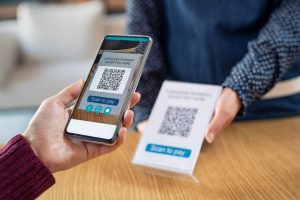
From online shopping and food ordering with a swipe, to sending peer-to-peer transfers, topping up in-game credits, or even receiving digital red packets during Lunar New Year—younger generation nowadays has grown up in a world where money moves at the speed of a fingertip. Smartphones and laptops have quietly taken the place of leather wallets, while the familiar clink of coins and rustle of banknotes has been replaced by the silent dance of digits on a glowing screen. Due to the convenience brought by technology, though students are yet to be financially independent, they have emerged as a formidable consumer force. But this frictionless spending raises deeper questions: how do new-era consumption patterns reshape financial mindsets? In an age of ‘painless payments,’ what kind of digital financial literacy must students cultivate to steer through modern economy with wisdom rather than whim?
As e-wallets surge in popularity, a 2022 poll revealed that Hong Kong primary school students have a relatively weak concept of money and insufficient understanding of e-wallets. Nearly one-quarter (23%) of the surveyed students believed that money could never run out, while one-third (33%) did not know where the e-wallet money came from. 57% were uncertain about their average monthly expenses, and almost two-thirds (62%) said they were unsure of their e-wallet balance. While e-wallets undoubtedly bring convenience, the arising financial concepts and money management habits —as children cannot see or physically touch actual coins and banknotes —may become abstract and vague.
Earlier in October 2025, the Hong Kong Institute of Certified Public Accountants released the Teen Money Management Survey 2025. The survey ranked the financial literacy of local primary and secondary school students at a ‘B-’ level, indicating that students generally possess basic financial knowledge and correct spending attitude. The findings revealed that as many as 87.4% of the respondents reported having savings habits, consistent with the survey conducted two years ago. More than half (50.4%) of them regularly track their income and expenses, marking a 15 % rise from the maiden survey in 2020, reflecting an improvement in their basic financial literacy. The survey also highlighted a growing trend of students using digital tools for financial management: 27% of students manage their accounts digitally, a rising proportion, and the medium they receive pocket money has also shifted toward cashless methods, such as Octopus cards and e-payment platforms.
When it comes to cybersecurity and fraud prevention, students rated gave themselves high marks, at the average 4.1 over 5. Yet nearly 10% reported financial losses due to fraud. It is evident that students’ awareness and ability to guard against fraud still need to be strengthened.
Financial Habits Formed in Childhood: Early Financial Literacy Education Abroad
Some may see financial management as the preserve of adults. After all, students are not yet earning or shouldering the responsibility of supporting themselves, so building financial literacy seems premature. However, a study conducted by the University of Cambridge has shown that children’s concepts of money are set as early as the age of seven. By the time they reach adulthood, reshaping those financial mindsets can be far difficult.
The UK Department for Education recently announced that financial education will become a compulsory subject in primary schools from 2028. In the United States, 2024 statistics reveal that 35 states now require high school students to complete a personal finance course before graduation, an increase of 12 states compared with 2022. This trend underscores the growing global emphasis on financial education. Introducing money concepts at an early stage is not merely about managing pocket money; it is about instilling sound values and cultivating independent thinking skills—key to preventing future problems such as overspending and debt crises.
Leveraging Local Finance Education Resources
In Hong Kong, although financial education is not a compulsory subject, there are ample relevant teaching resources available. The ‘Learning and Teaching Resources on Financial Education’ webpage launched by Education Bureau provides a one-stop platform for financial education materials from different organisations. Notable examples include the ‘The Chin Family Smart About Money’ animation series by Investor and Financial Education Council (IFEC) and the ‘10 Lessons in Money Management’ online comic Hong Kong by Institute of Certified Public Accountants’. The topics are wide-ranging and closely connected to everyday life, such as ‘Beware of in-game purchase addiction’ and ‘Where Does Money Come From?’, instilling financial concepts to students through clear and engaging ways. As the supporting organisation, EdCity took part in the ‘Hong Kong Financial Literacy Championship 2025’, organised by the Hong Kong Economic Journal (Education) and co-organized by the Education Bureau and the Hong Kong Monetary Authority. This project targets secondary school students, assisting them in mastering correct financial knowledge, methods, and skills through an online quiz competition and a youth financial talent program. It also aims to establish appropriate values and attitudes towards financial management and cultivate financial literacy. Students will gain insight into the developments in innovation, financial technology, and artificial intelligence in Hong Kong, laying a strong foundation for future financial talent. Schools and parents can make good use of these resources as the effective tools for financial education.

Cultivating Digital Financial Literacy
In the era of digital finance, schools and parents can adopt a diverse strategies to nurture the next generation’s money mindset. A Taiwanese parenting expert adopted the slogan of an international finance education organisation — Learn, Save, Earn, and proposed three essential financial literacy skills:
- Learn: Starting from primary school, educating children about the concepts of money such as ‘needs versus wants’, 'budgeting versus spending.' Interactive learning through board games and competitions can be used to reinforce their knowledge of investment and risk management at different stages of learning.
- Save: Encourage the students to build savings habits, such as pocket money management or the 365-day saving method, allowing students to experience the practice of saving and learn about the concept of compound interest, thereby beginning to cultivate basic ideas of saving and financial management.
- Earn: Through organising activities such as school fairs and second-hand markets, students can gain firsthand experience of the process of earning money, so as to understand the hard work required to make money while having a taste about entrepreneurship.
Raising Financial Awareness through Digital Tools
Today’s mobile apps and online games make it easier and simpler for students to build healthy financial habits — from expense trackers that account for every penny to interactive simulations that allow them to practise financial decisions-making in a safe, risk-free environment.

App:
The IFEC Money Tracker (iOS / Google play)
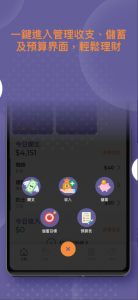
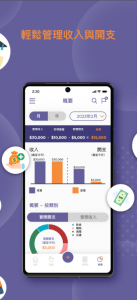
Launched by IFEC, the tool enables users to manage expenses and incomes, set budgets, create and track savings goals. It also offers the option to manage budgets jointly with family and friends, ensuring that spending stays within the budget.
Online Games:
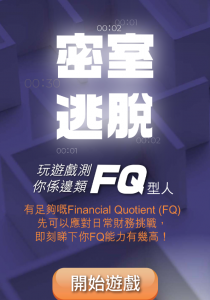
1. IFEC Online games and quizzes
Through a series of interactive games, such as ‘escape room’ and ‘space combat’, players can master money skills in a fun way.

2. Hong Kong Monetary Authority ‘Little Money Master’ Online Parenting and Educational Campaign
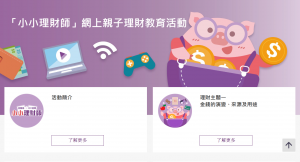
A series of financial education animation videos depicting a family’s daily life to educate kindergarten and junior primary school students to learn basic money management concepts and banking and payment services. Parents and kids can attempt web-based games, complete the worksheets, and follow demo videos to make DIY financial educational toys with recycled materials, learning money management topics while having fun.