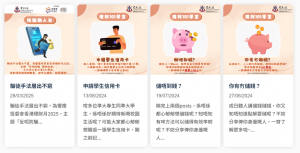
There is a familiar Chinese saying: ‘Money can strain relationships,’ which often makes families hesitant to discuss financial matters. Many parents may also be unaccustomed to teaching their children how to manage money. In truth, it can begin with simple, everyday scenarios, allowing young children to handle money and learn to distinguish between ‘needs’ and ‘wants,’ thereby building financial literacy. The Investor and Financial Education Council (IFEC) has produced a series of online resources ‘Money essentials for kids and teens’ to help parents discuss financial management with their children in a simple and clear way, including articles, animated financial stories, and practical tips such as ‘Five Common Mistakes about Pocket Money’ and 'Teaching Children Money Management with Octopus Card.’
IFEC suggests that when parents cultivate children’s sense of responsibility, discipline, and good habits regarding money, they can apply the five top tips:
1. The real deal
Use real bank notes and coins to teach children about the different denominations, and educate them about electronic money, such as Octopus, ATM and credit cards.
2. Learn from experience
Parents can give their children an appropriate amount of pocket money and let them decide how to spend it. Offer suitable guidance and allow to gain valuable learning experience from mistakes.
3. Rewards
Appropriate rewards help children establish good money management habits. When they save regularly or keep basic accounts, offer them non-materialised rewards, such as bed-time stories, holiday activities and hobby classes. Do not giving cash rewards or expensive gifts to prevent material dependence.
4. Teach by example
Parents can share with kids how they work hard for earning the salary to support the family. They should spend the money responsibly and save the hard-earned income. They can also try to let children learn about essential household expenses, such as water, electricity and rent. When working on the family budget, it is wise to let children observe or even help out.
5. Games
Use desktop and online games, or various activities, to encourage your kids to learn more about money management.
Self-learning Resources for Financial Literacy:
Visitors can explore a variety of themed pavilions packed with interactive games and challenges. At ‘FinEd Farm’, players experience the fruitful harvest brought by farming. Meanwhile, ‘Money-verse’ puts their wits to test as they battle financial pitfalls like scams and mounting debts. Through the interactive games, they make informed investment decisions.
Address: Unit 304, The Mills, Tsuen Wan
Opening hours: 10:00 am to 6:00 pm every day, including public holidays except Lunar New Year
Admission: Free of charge
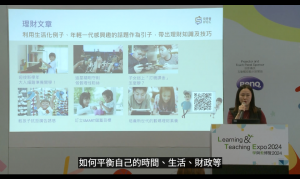
2. Hong Kong Education City Learning & Teaching Expo 2024 — K12 Theatre ‘Enhancing Students’ Financial Literacy with Extended Learning Activities and Resources’
This seminar shared how to utilise available resources on IFEC’s education platform, The Chin Family, as extended learning activities for strengthening financial education, enhancing students’ financial literacy and long-term financial well-being.
3. EDB Educational Multimedia (EMM): ‘Personal Resources Management: Financial Literacy Module’ Animated Video Clip (Chinese only)
This ‘Three-Minute Concept’ animated video clip is suitable for students from Secondary 1 to Secondary 3. It can be played by parents or teachers for students, and can also be integrated into e-learning, allowing students to watch the clip on their own as pre-lesson preparation or post-lesson review, thereby encouraging self-directed learning. At the end of the clip, there are reflection questions to serve as a basis for extended discussion.

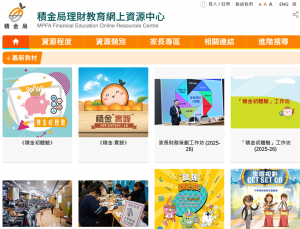
4. MPFA Financial Education Online Resources Centre
Provides a wide range of financial teaching resources in diverse formats tailored to different users, including ‘Embarking on my MPF Journey’ for tertiary students, and Financial Planning Workshop for Parents.
5.Tung Wah Group of Hospitals Healthy Budgeting Family Debt Counselling Centre Financial Education Resources (Chinese only)
This platform provides diversified self-learning resources on financial management, including financial columns, short videos for junior secondary financial education, interactive learning clips, and financial publications.