
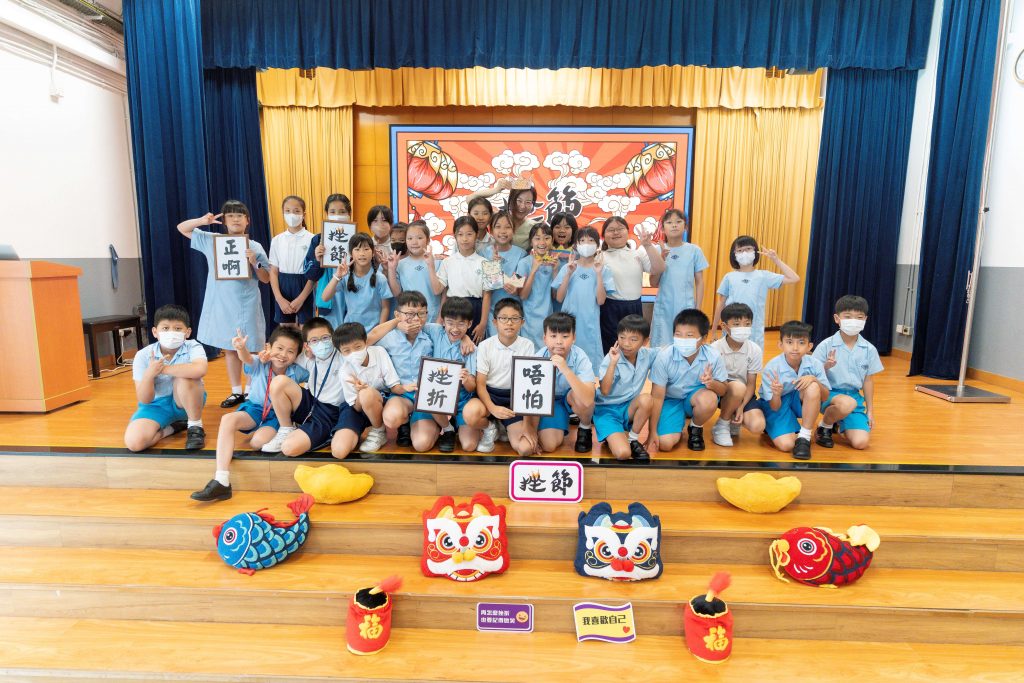
During their school years, students grow and explore in areas such as academics, interpersonal relationships, and personal interests, building their self‑identity, worldview, and coping skills for different situations. Challenges and difficulties are inevitable along the way. To support holistic development, Tsuen Wan Catholic Primary School has specially arranged ‘Adversity Resilience Education’ and other activities, supporting Primary One to Six students build psychological well‑being and a sense of life values, fostering all-round growth.
Stronger Reactions to Defeat After Pandemic
Mr Ngan Poon Lung, Values Education Officer at the school, shared that teachers, through observation and data from the Assessment Program for Affective and Social Outcomes, discovered certain trends following a period of online classes. Some students, having had fewer opportunities for full group collaboration, appeared passive when working with others and needed to rebuild social skills and confidence. Having grown used to learning at home, where immediate comparisons were rare, some were more prone to emotional fluctuations with the normal ups and downs of academics or competitions upon returning to school. Their tolerance for setbacks was lower, often magnifying a single failure — for example, after failing just one test, they may conclude that ‘I’ll never be good at this subject.’ Some also resort to avoidance or emotional responses, such as giving up, crying, or blaming external factors like ‘the questions were too hard’ or ‘others distracted me’. What was missing was the habits and initiative to analyse the causes of setbacks and the ability to seek alternative solutions, both in mindset and action.
In light of this, Ms Peggy Chan Pik Ki, Principal of Tsuen Wan Catholic Primary School, has mobilised the teaching team and the school‑based social worker to design values education activities based on two core principles aimed at strengthening students’ sense of self‑worth. The first aligns with the OECD’s ‘Learning Compass 2030,’ which advocates an aspirational vision to cultivate student to ‘become happy and responsible citizens’. The second addresses the challenges to children’s mental health and sense of life values brought about by the post‑pandemic era and current social conditions.
Core Themes of Value Education Activities:
- Values and Character Education: Cultivating core values such as gratitude, honesty, respect, responsibility, and care for others.
- Emotional Management and Self‑Awareness: Learning to identify, accept, and manage emotions and building a healthy self‑image.
- Interpersonal Relationships and Social Skills: Developing effective communication, teamwork, conflict resolution, and building genuine friendships.
- Career Planning and Meaning Exploration: Understanding oneself, exploring interests, envisioning the future, and discovering the meaning of life.
- Adversity Resilience Education: Strengthening psychological resilience in the face of setbacks and growing through adversity.
Blending Curriculum and Activities for Value Building
The school enriches students’ learning experiences through a dual-track approach. On the curricular side, relevant teaching elements are incorporated. For example, Religious and Moral Education classes address values and life issues, while Chinese classes use literary appreciation to guide students in exploring characters’ choices, struggles, and growth. On the extracurricular side, themed activities are integrated. In the ‘Emotional Mastery Workshop: Cultivating Self-Regulation & Resilience,’ junior students learned basic emotions through games, while senior students practiced advanced regulation skills. During the Gratitude Month series, students wrote thank‑you cards and learned to serve others, cultivating a spirit of appreciation. On the Vocational Exploration Day: Inspiring Futures through Hands-On Learning,’ students explored their potential by taking on different roles.
One of the school’s most targeted value education experiences was the ‘Adversity Resilience Week: Embracing Challenges, Building Character’ held this July for Primary Four students. The school has invited a life education organisation Why Not Education to co-organise the event. The program’s name plays phonetic pun on the word ‘frustration’ in Cantonese, suggesting that setbacks should be treated like a festival — faced with optimism and positivity. Over three days, students first ‘tasted frustration,’ then ‘confronted frustration,’ and finally ‘overcame frustration.’ In the ‘Perfect Challenge’ task, for instance, students were asked to complete a craft or solve a puzzle within a limited time to an exceptionally high standard — a goal almost no one could achieve ‘perfectly’. Afterwards, instructors guided discussions on the feelings of being ‘imperfect’ and introduced the concept of the ‘growth mindset’: ‘It’s not that you can’t, it’s just that you haven’t yet.’
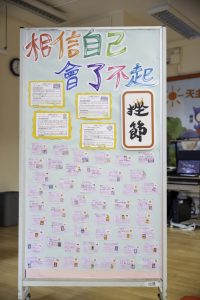
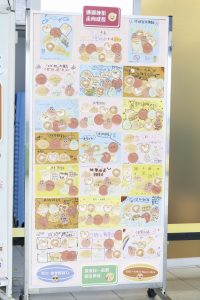
Through the ‘Museum of Learning through Setbacks: Reframing Failure as Growth’ activity, students worked in groups to examine real‑world cases of corporate failure. From these examples, they analysed and learned to distinguish between ‘good failures’ and ‘bad failures,’ shifting the focus from ‘who was wrong’ to ‘what we have learned.’
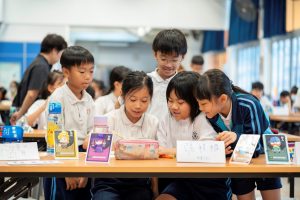
Through group discussions, students are stimulated to think and deepen their learning.
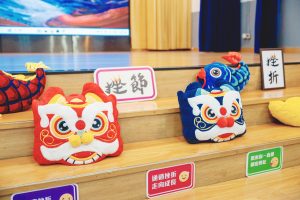
Light‑hearted and engaging activities allowed students to live with setbacks from a broader mindset.
Students who joined the activity all shared their reflections. Luna Wong affirmed that ‘as long as we are not afraid of failure, setbacks, or low points, we can always bounce back, rise from the bottom, and make a comeback.’ Elaine Ng believed ‘when facing setbacks, we must persevere without giving up, keep working hard, believe in ourselves and others, and be more confident — because everyone has talent.’
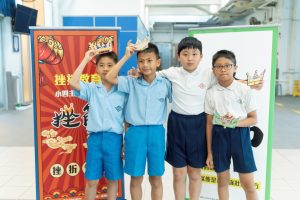
Students wrote down their feelings and takeaways from the activity.
Positive Shift in Mindset and Behaviours
After the activity, teachers observed that students increasingly used growth‑mindset language such as ‘I can try another method’ and ‘This time I have learned...’ They were able to distinguish between ‘temporary setbacks’ and ‘permanent failure,’ avoiding the tendency to magnify stress. In class, students became more willing to raise their hands to attempt uncertain answers and showed greater persistence in completing challenging tasks during group discussions. When minor conflicts arose among peers, more students took the initiative to communicate and resolve them. Overall, a more inclusive and supportive atmosphere emerged among peers, with students learning to applaud each other’s efforts.
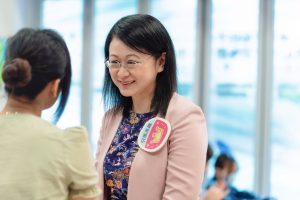
Ms Peggy Chan Pik Ki, Principal of Tsuen Wan Catholic Primary School, places great importance on nurturing students’ ability to solve problems from setbacks at an early age.
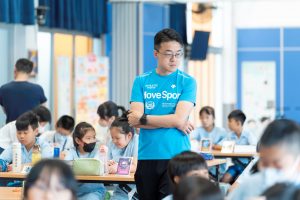
For Mr Ngan, true education is not about chasing a brief lead at the starting line, but about cultivating in children the endurance and wisdom to face the long journey of life.
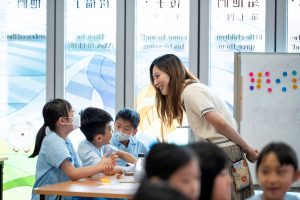
School-based social worker Ms Li Kam Wa, who co‑organised the activity, witnessed many children develop new perspectives into the definition and meaning of ‘adversities’ during the event.
Finally, Principal Chan encouraged the students, ‘When we view life through a broader lens, every attempt, every effort, and even every stumble transforms into essential nourishment for the future, enabling children to walk steadily, calmly, and brilliantly along the long journey of life.’ Mr Ngan added that medals will fade and scores will become history, but the team spirit forged along the way, the courage to persevere, and the resilience to rise again from adversities are the true treasures that accompany children throughout their lives.