
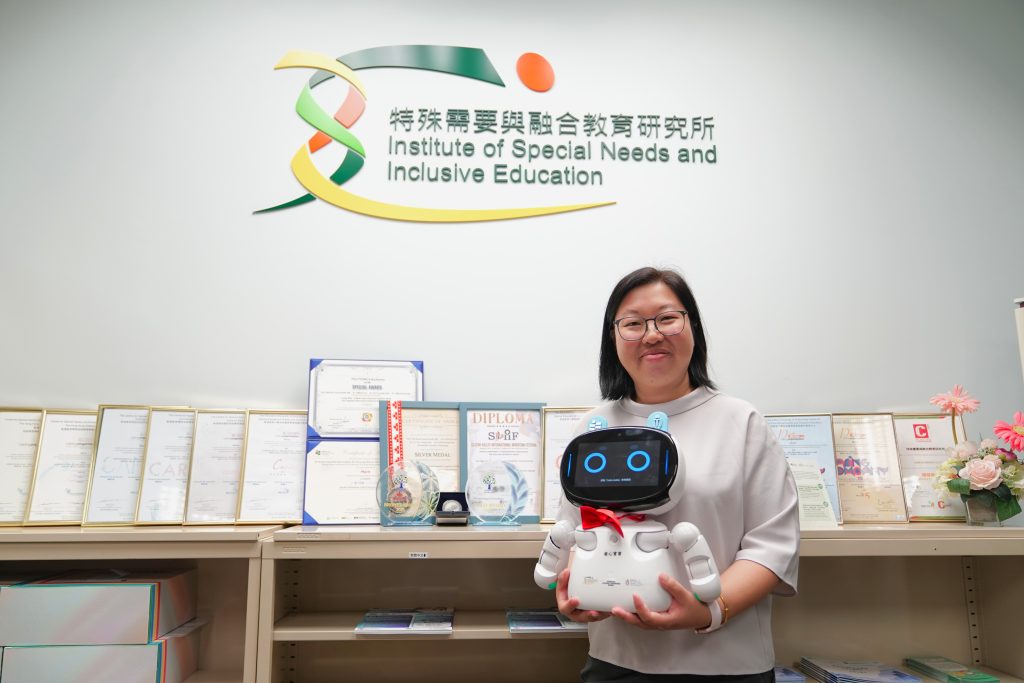
Dr Fung developed the ‘Loving Baby’ emotional support robot to promote emotional education.
‘No matter how rich or sophisticated the features are, a personalised interface is what truly helps students engage in learning,’ said Dr Gabby Fung Ka Yan, a postdoctoral researcher at the Institute of Special Needs and Inclusive Education of The Education University of Hong Kong (EdUHK).
To support students with special learning needs (SEN), Dr Fung began developing innovative teaching tools as early as 2018. The ‘Loving Baby’ emotional support robot and the ‘Deep Learning Technology for Dyslexia’ are among the representative outcomes of her work. She believes that using technology to support SEN is not simply about the technology itself. Careful attention to design is equally important in creating a human-centred user experience that gives students positive learning experiences.
She has observed that teachers and students face different challenges when using innovative teaching tools. While the number of teachers working in inclusive education is gradually increasing, some need training and operational support when using innovative teaching tools, as well as sufficient time to practise and adapt to them. Students, meanwhile, are often curious about new tools and may become more excited when using e-learning tools in class. They may also compare how well they can use the tools, presenting certain challenges for classroom management.
A Single ‘Cross’ Can Crush a Student’s Confidence
The tools developed by Dr Fung serve different purposes, helping reduce the burden on teachers of preparing appropriate teaching materials for students with different learning needs:
- ‘Deep Learning Technology for Dyslexia’: Assists teachers in identifying students who may show signs of dyslexia at an early stage.
- ‘AI Reading and Writing Training System’: Provides mini-games to develop students’ listening, speaking, reading and writing skills.
- ‘AI Vocabulary Learning System’: Based on a scaffolding approach, the system progresses from simple to more advanced content, gradually building from words to short phrases and sentences. It also incorporates multisensory and interactive design to engage students in learning, followed by interactive activities to strengthen their Chinese language skills.
- ‘AI Scenario Training System’: Helps students simulate unfamiliar situations in advance. For students on the autism spectrum, this can help reduce behavioural problems arising from anxiety.
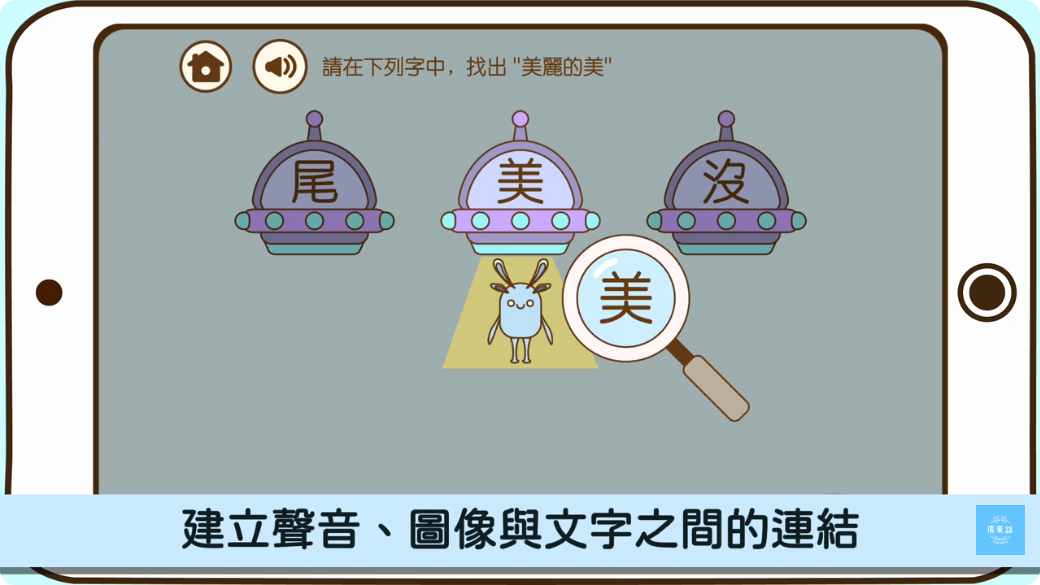
The ‘AI Reading and Writing Training System’ uses images, pronunciation and interactive games to help students recognise Chinese characters and understand vocabulary.
Dr Fung also emphasised that interface design and user experience are particularly important for students with SEN:
- Simple interface and consistently shaped function buttons: Reduce the pressure of adapting to the system, allowing students to quickly become familiar with how it works and build confidence.
- Rounded typeface: Avoids sharp angles in characters that students may perceive as aggressive, helping them remain emotionally calm.
- Soft, warm colours: Bright red is replaced with rose red, and all colours are tested to ensure they are presented in ways that meet the needs of different users.
- Button border thickness: Adjusted to suit students’ characteristics and ensure optimal visual comfort.
‘Some students told us that the “tick“ and “cross” used when marking answers made them feel pressured. The “cross” indicating an incorrect answer was particularly likely to leave them feeling frustrated. We therefore replaced these symbols with visual representations. For example, an intact cup represents a correct answer, while a broken cup represents an incorrect one. This is a gentler way to reduce feelings of frustration.’ Attention to these details is an important part of helping students ease feelings of tension and, in turn, focus more on learning.
Enhancing Engagement and Motivation for Self-Learning
Dr Fung recalled a teacher sharing that a student had struggled to concentrate in class for three years. After using these tools, the student not only became more engaged in lessons, but also began proactively helping classmates use them. ‘There was once a student who, to avoid letting classmates know that they could not read certain words, used digital tools to learn the pronunciation independently. This not only reduced peer pressure, but also strengthened the student’s motivation for self-learning.’
Strengthening Teacher Training
To help teachers become familiar with these tools, the team provides step-by-step guidance and collects feedback on technical issues encountered during use. By working closely with schools, the team develops teaching tools that better meet individual schools’ needs. Dr Fung emphasised that education technology is not about pursuing the latest or most sophisticated technology. Rather, it is about matching the technology to the teaching content and the school’s resources, and providing the most appropriate level of technology to meet school-based and individualised needs.
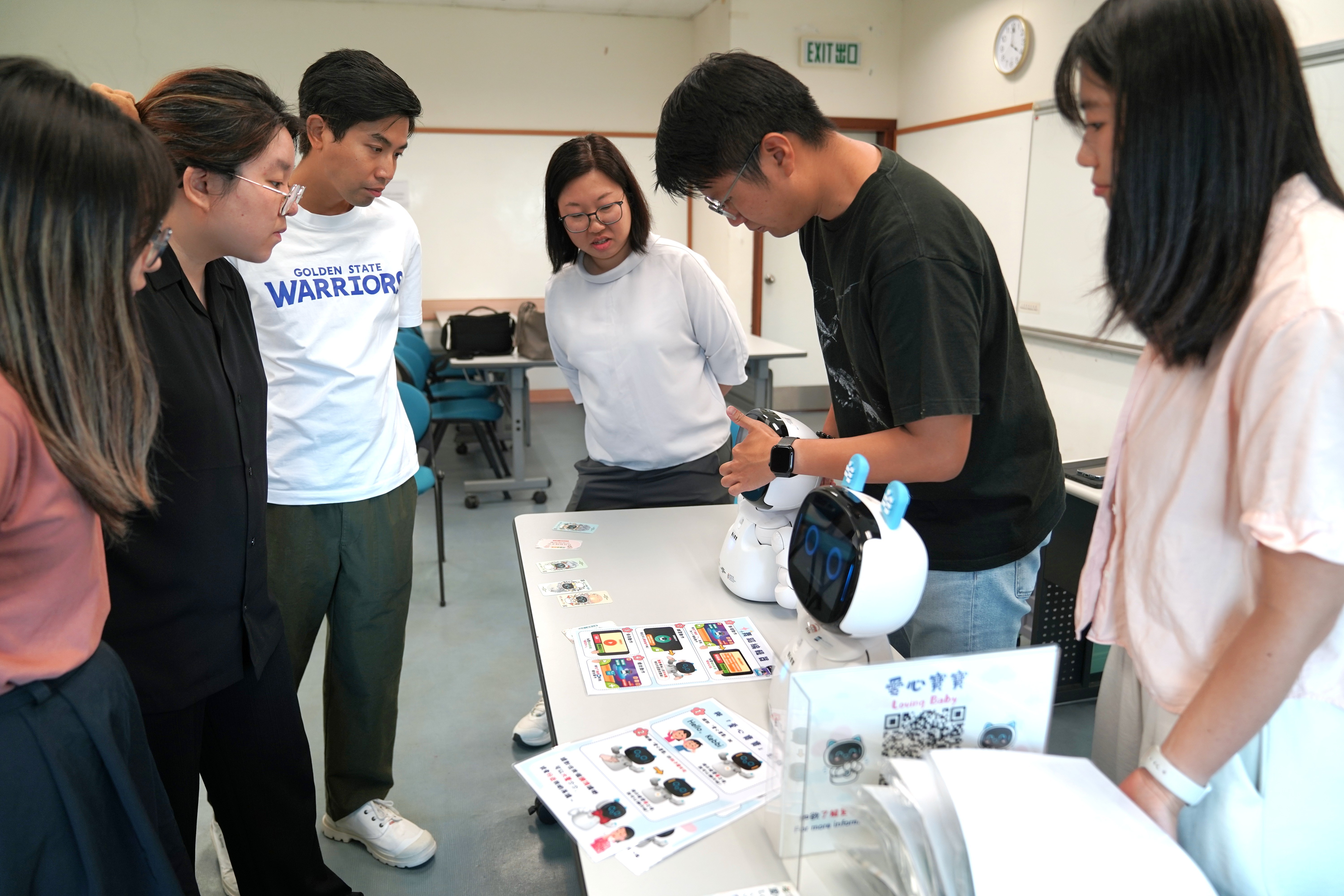
The research team provides teachers with application training.
To learn more about insights and solutions for supporting SEN with AI, join the following event:
AI in Education Forum
Theme: Innovation for Every Learner
Date: 26 - 27 November 2026 (Thursday-Friday)
Venue: West Kowloon Study Centre (Museum Drive and Austin Road sites), The Education University of Hong Kong
Time: 1 p.m. to 5 p.m.
Organisers: the Education Bureau, Hong Kong Education City and the Education University of Hong Kong
Focus: AI, robotics, and supporting students with special educational needs
Three core parts: Keynote Addresses and Panel Discussions, Hands-On Practice and Training Sessions, EdTech Solution Showcases and Live Demonstrations
Registration and details: https://web.edcity.hk/en/aied/home/
Learning and Teaching Resources:
- Explore innovative education tools: EdMarket
- AI Teacher Professional Training: ‘PD Thursday’ Teacher Continuing Professional Development (CPD) series
Related Article: Seeing the Differences: AI Empowers Inclusive Education, Helping Every Child Play to Their Strengths
Related Article: Technology Lightens Teachers’ Workload