
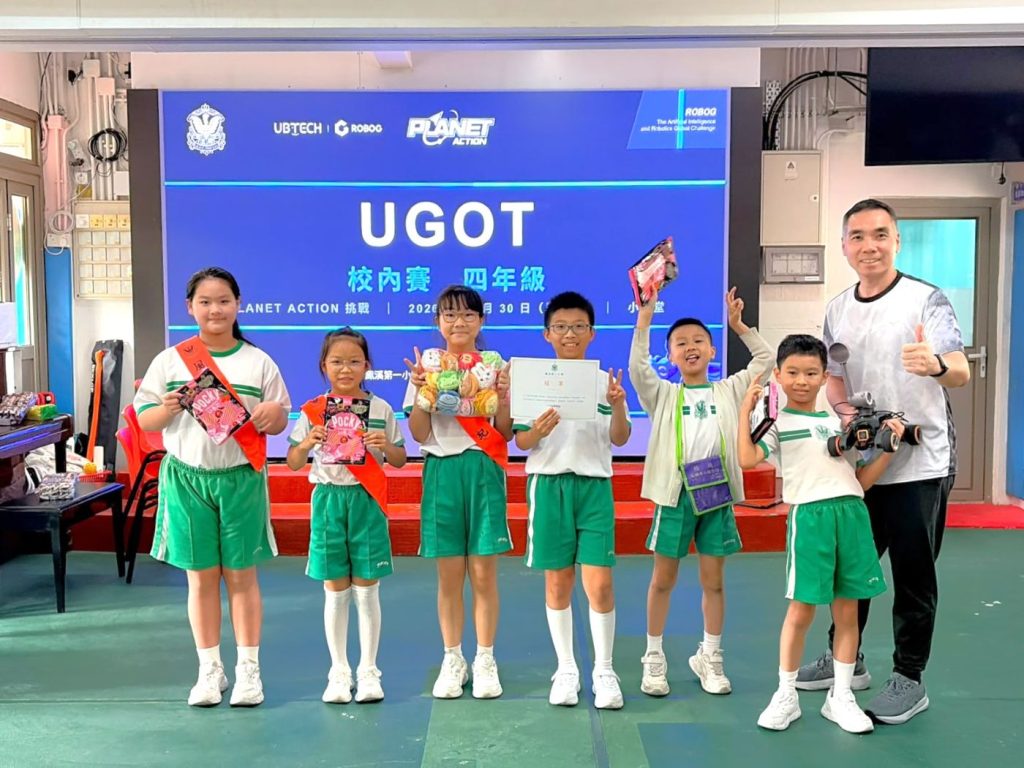
Vice Principal Mr Chow Lap Ming of Fung Kai No.1 Primary School takes a photo with students at the school’s robotics competition award ceremony.
He can tell stories endlessly.
But when it comes to putting pen to paper, he gets stuck, and his writings often run to just three lines.
He is a student with dyslexia.
His teachers understand that those three lines reflect the difficulties he faces with writing, not the imagination in his mind.
So they tried a different approach: before writing, they asked him to tell his story aloud and record it using speech-to-text technology. Line after line appeared on the screen, forming a complete, beautiful story.
In that moment, he became a writer.
Every teacher wants to see what makes each child unique. Technology can return teachers their time and students their stage. ‘Integrating technology into special education support not only helps reduce teachers’ administrative workload, but also enriches personalised teaching resources. When teachers can focus more on lesson design and caring for their students, students are more likely to be seen and appreciated in the classroom,’ shared Vice Principal Mr Chow Lap Ming of Fung Kai No.1 Primary School.
Strengthening the ‘Three-Phase Intervention Model’ with AI
Ms Viola Chau Man Yin, Primary School Mistress Special Educational Needs Coordinator at Fung Kai No.1 Primary School, shared that teachers responsible for supporting students with special educational needs (SEN) commonly faced two major challenges before the introduction of AI. Firstly, or more complex cases, preparing an Individual Educational Plan (IEP) required teachers to consolidate follow-up records from the discipline team and the counselling team, records of parent interviews, student attendance records, academic performance, classroom observation records and various specialist reports. Simply reviewing and organising information scattered across different sources required considerable effort, while consolidating the assessment information for each student was also highly time-consuming. Another challenge was the limited availability of personalised teaching resources. Teachers often lacked the time and professional resources to create social stories and differentiated assignments and provide ongoing follow-up, affecting the timeliness and continuity of support.
With the support of AI, the school has been able to enhance its three-tier intervention model for students with SEN:
Phase 1: Whole-class support
Generative AI is used to draft differentiated teaching materials and visual cards. For example, teachers can use the same short passage to generate ‘basic’ and ‘advanced’ versions of reading comprehension questions, with prompts and visual cues. AI can also be used to quickly create vocabulary picture cards for use in whole-class learning adaptations.
Phase 2: Small-group support
In small groups designed to strengthen literacy skills, teachers use generative AI alongside visual mnemonics to help students with dyslexia learn vocabulary. For example, for characters that students in the group often confuse (such as ‘燒’ and ‘澆’ in Chinese), AI is used to generate contrasting images closely linked to the meanings of the characters. This helps students make connections between a character’s meaning, components and pronunciation, followed by matching and oral exercises within the group.
Phase 3: Individual support
Generative AI is used to draft social stories as a starting point for personalised support. For example, for a student with autism who is unusually sensitive to insects, the teacher first uses AI to draft a social story, then revises its content and wording based on recommendations from occupational therapists and speech therapists. The resulting story becomes a visual support strategy incorporated into the student’s IEP.
Generating Recommendations for IEPs Quickly
In addition, the school is piloting a range of AI-supported solutions across four areas: administration, early identification, language learning, and emotional & social skills training. To reduce the administrative workload, the school is trialling an AI-Powered IEP Generation System from a commercially available school management platform. The system automatically consolidates student records and generates recommendations for IEPs for teachers’ reference, significantly reducing the time required to prepare them.
The system directly addresses the considerable time and effort teachers need to prepare IEPs. Its workflow is to ‘consolidate first, generate next, then revise manually’, followed by a final review by teachers:
- Consolidating information: The system automatically checks whether three main categories of information (student characteristics, professional assessments, and support background) are complete, and uses colour coding to flag any missing information, saving teachers the time of searching through documents. Schools can also set privacy permissions for individual students to ensure that their privacy is protected.
- AI-generated bank of goals: Once the information has been entered, the system can generate recommended short-term and long-term goals in about one to two minutes, allowing teachers to select suitable items.
- Retaining professional control over revisions: Teachers can revise each AI-generated goal or select and apply templates from the system database according to the type of SEN, ensuring that the plans meet the school’s actual circumstances.
- Exporting and reviewing: Teachers can enter outcomes evaluation directly into the system and download the document file with one click, for easy communication with parents.
By using AI to consolidate the data above automatically, teachers can quickly prepare an initial IEP draft without having to manually transfer and piece together information. This allows them to move directly to the professional analysis and revision stage, while also giving them more time to make personalised adjustments and communicate with students and parents.
Early Identification of Potential Learning Needs
For early identification, the school is trialling the ‘Deep Learning Technology for Dyslexia’ developed by a team from the Institute of Special Needs and Inclusive Education at The Education University of Hong Kong. Through games involving copying Chinese characters, matching characters to form words and identifying character components, the system helps identify junior primary students who may have dyslexia at an early stage.
To address individual students’ needs, the school provides further language learning support using a system named ‘Enhancing language learning through AI-empowered, LLM-supported Interactive Social Robot’. The system helps students recognise and remember words, expand short sentences and engage in real-time conversations. In addition to learning support, the school also places emphasis on emotional and social support. The ‘Loving Baby’ emotional support robot helps students express their emotions and practise social skills through companion-style conversations and STEM programming activities.
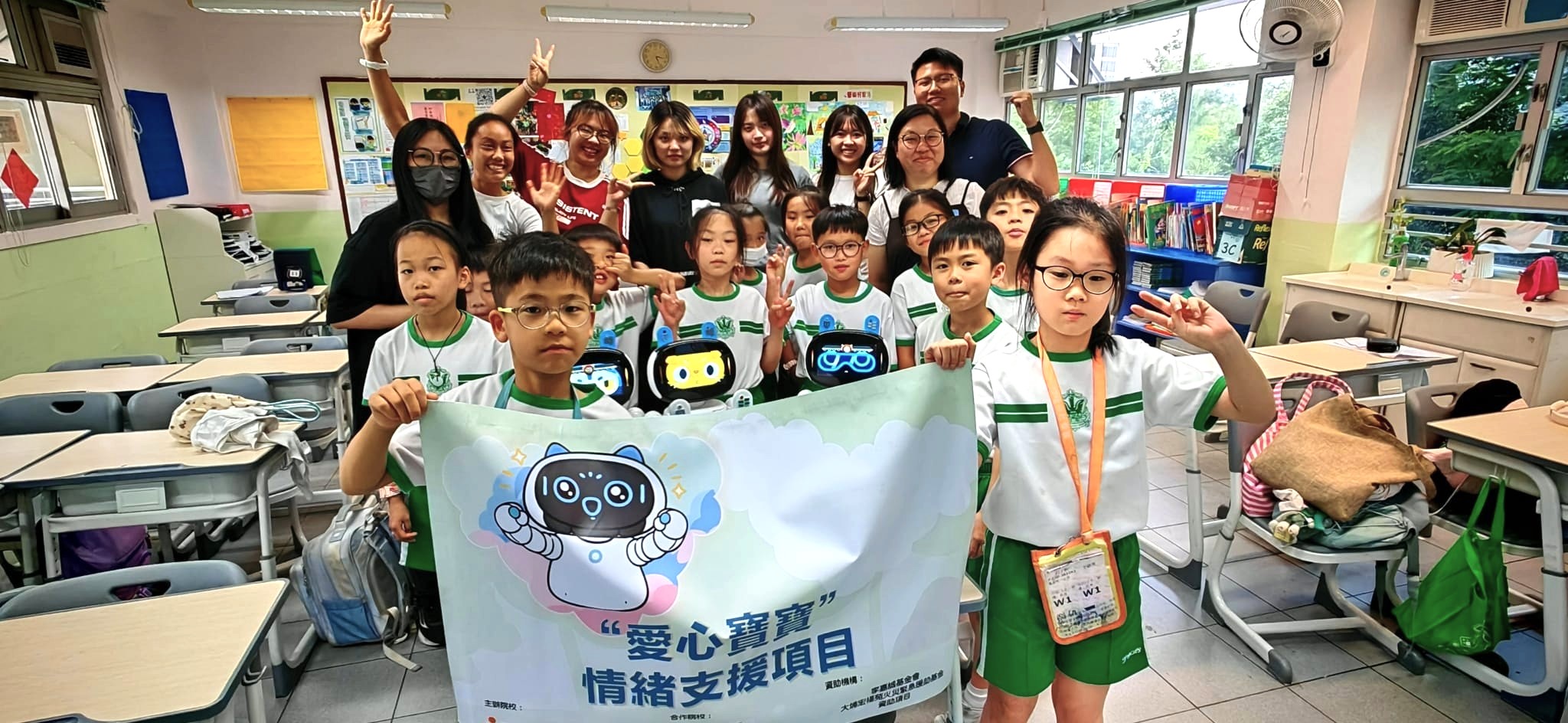
Through innovative technology initiatives, the school strengthens emotional support for students and fosters a positive, inclusive school environment.
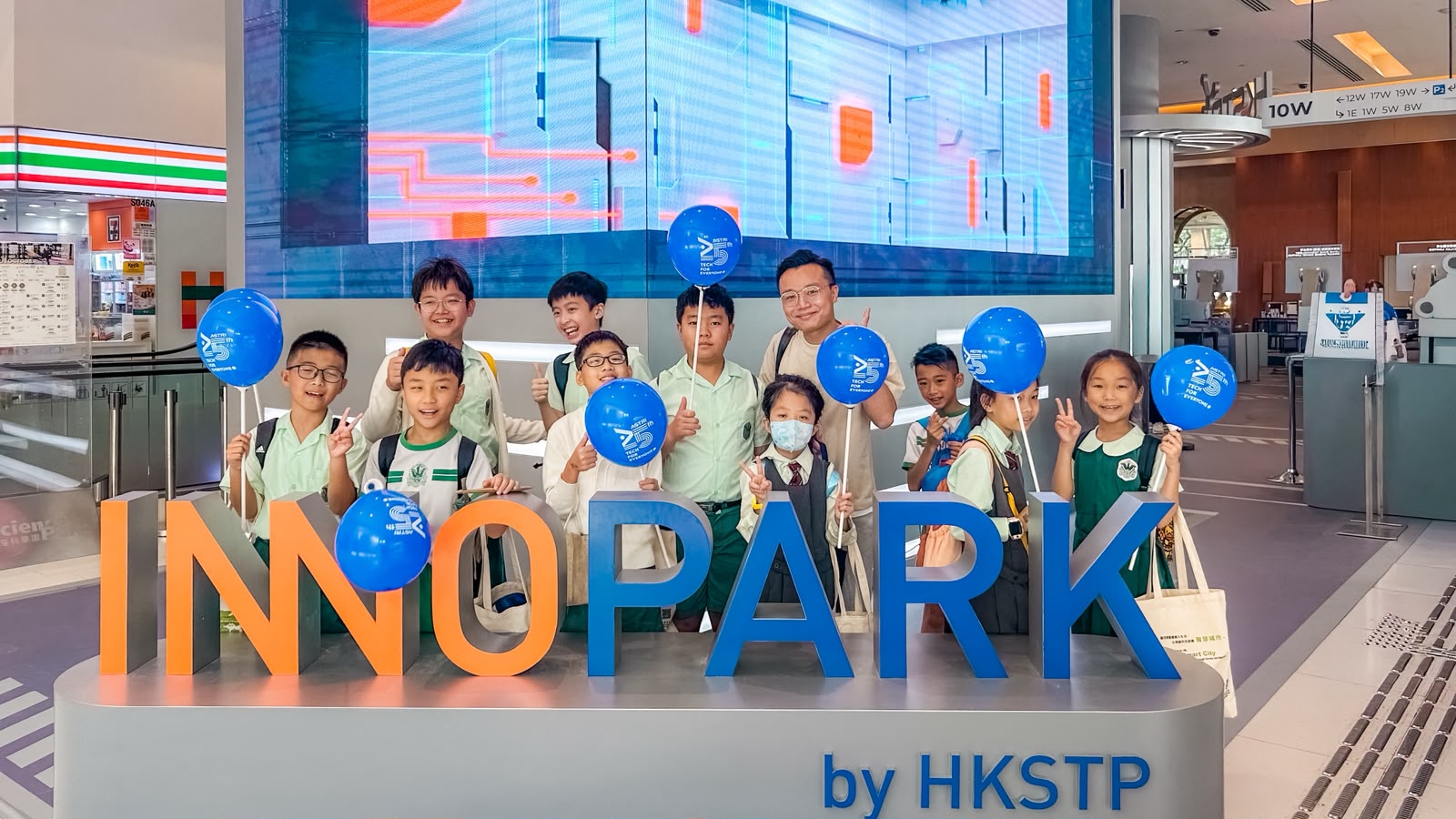
By visiting Hong Kong Science Park and taking part in AI workshops, students gain hands-on experience in the basic concepts of AI.
Unleashing Diverse Potential and Building Social Confidence
Students, too, have experienced changes. Mr Chow Lap Ming recalled, ‘There was a student with dyslexia who was interested in programming. By using an AI robot to demonstrate his programming project, he not only gained confidence but also gave his peers a new appreciation of his strengths.’ These learning experiences help reduce labelling and foster a culture of mutual respect.
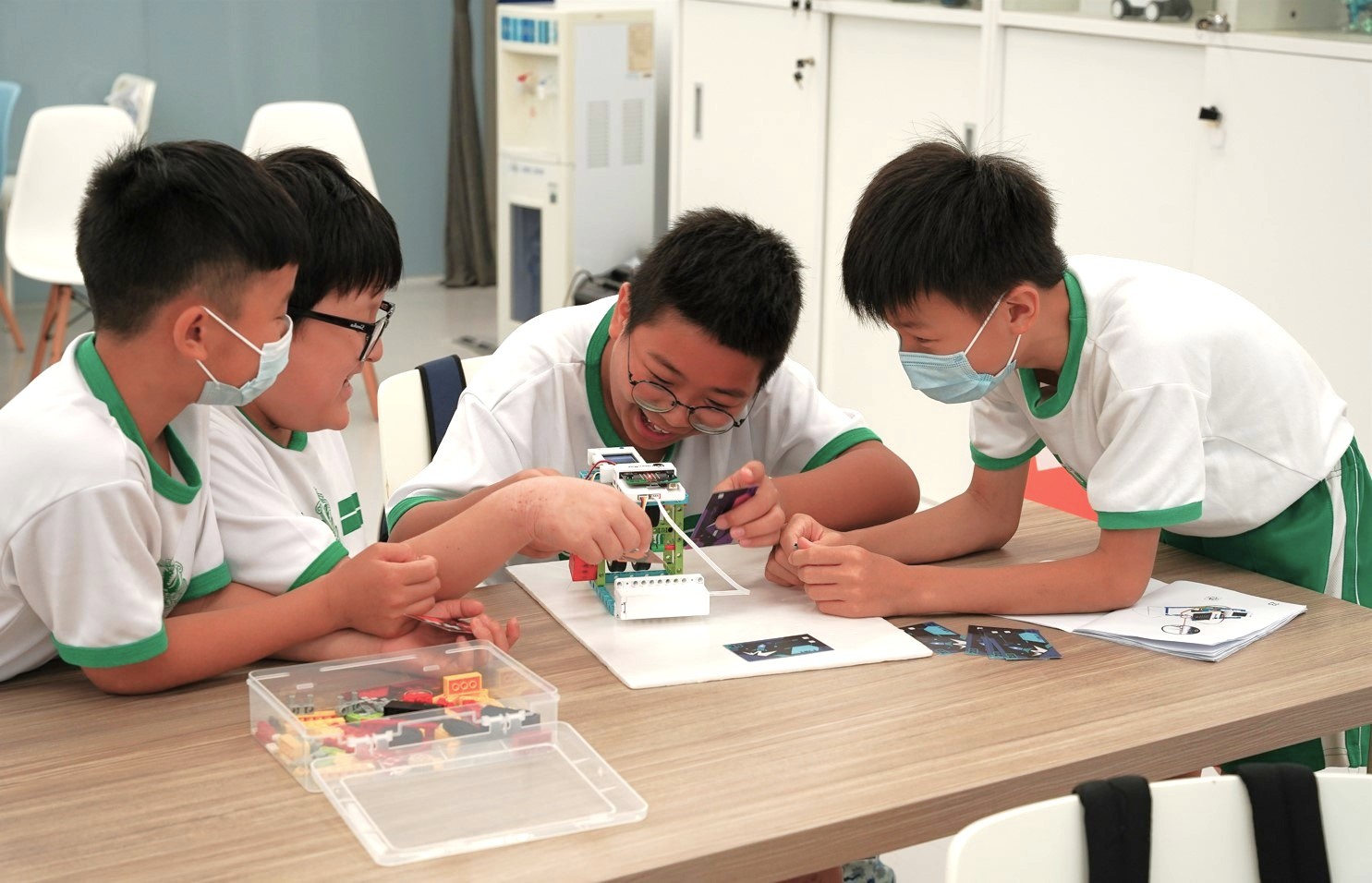
Innovative technology enhances classroom interaction and increases students’ interest in learning.
‘Human-Centred’ is the Key
Principal Chow hopes that technology can continue to ease teachers’ administrative workload, allowing them to devote more time to compassionate emotional support and innovative teaching. At the same time, he hopes that AI can, in future, connect support between school and home in a more systematic way, enabling parents to continue using the school’s adaptation strategies at home.
AI provides an important tool for supporting inclusive education, but Principal Chow firmly believes that the key remains a ‘human-centred’ approach. ‘By integrating AI into teaching and support processes across the school in a careful and gradual manner, we believe we can more effectively foster a positive and inclusive school environment that respects differences, values diversity and cares for every student.’
To learn more about insights and solutions for supporting SEN with AI, join the following event:
AI in Education Forum
Theme: Innovation for Every Learner
Date: 26 - 27 November 2026 (Thursday-Friday)
Venue: West Kowloon Study Centre (Museum Drive and Austin Road sites), The Education University of Hong Kong
Time: 1 p.m. to 5 p.m.
Organisers: the Education Bureau, Hong Kong Education City and the Education University of Hong Kong
Focus: AI, robotics, and supporting students with special educational needs
Three core parts: Keynote Addresses and Panel Discussions, Hands-On Practice and Training Sessions, EdTech Solution Showcases and Live Demonstrations
Registration and details: https://web.edcity.hk/en/aied/home/
Learning and Teaching Resources:
- Explore innovative education tools: EdMarket
- AI Teacher Professional Training: ‘PD Thursday’ Teacher Continuing Professional Development (CPD) series
Related Article: Seeing the Differences: AI Empowers Inclusive Education, Helping Every Child Play to Their Strengths
Related Article: Expert Insight: Supporting Inclusive Education with Human-Centred Technology